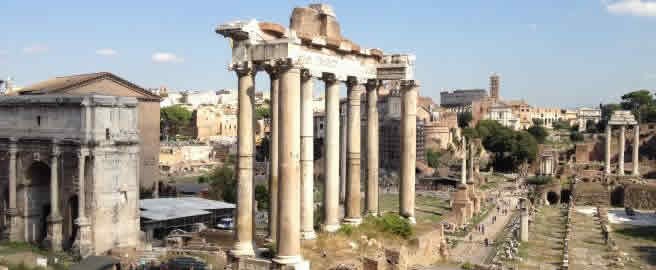
By 2.00pm on the 2nd of July 1644, 30,000 men were arranged in battle order on Marston Moor outside York. These men came from four different parts of the country: Scotland, Yorkshire, Lancashire and East Anglia. The battle commenced at around 7.30 pm and was over within two hours. The talk explained as to why the King was at war with Parliament, why the battle took place outside York and what exactly happened during those two hours. Key figures in the battle include prince Rupert, Oliver Cromwell and Thomas Fairfax.
Author Archives: webmaster
Bedpans and False Teeth
This presentation was a popular and humorous talk given by Denise Adlard, a retired nurse and midwife, from West Yorkshire who started at 17 years of age as a pre-trainee until she retired 49 years and 1 week later.
Drawing on her nearly 50-year career in the NHS (predominantly as a District Nurse in Bradford), it was peppered with reminiscences and tales to amuse and entertain with funny and heart-warming stories from her life in medicine .
Street Angels by Paul Blakey MBE
Street Angels by Paul Blakey MBE – 11th March 2026
Under the Streetlights: 20 Years of Street Angels:
Robbie Williams singing ‘I’m loving Angels instead’ is a song often serenaded to teams of Street Angels out and about on weekend evenings.
Street Angels, which started as a response to Halifax having a ‘Wild West of West Yorkshire’ reputation on weekend evenings, celebrated 20 years last November.
The ‘Wild West’ Years
Back in the day, between 8,000 and 12,000 people visited Halifax for a night out.
Energised by cheap alcohol and a large number of pubs and clubs in a small town centre, Halifax had become a must visit destination for a boozy night out.
Sadly sexual assaults, violence, under-age and binge drinking had blighted the town centre on weekend evenings leaving a lot of people who were or could become vulnerable.
‘Churches Together’ had asked the question ‘what are the needs in our town and what can the church do to meet those needs?’
Paul Blakey, challenged by the vulnerability within the nighttime, had an idea of opening a cafe, run by Churches Together and Halifax YMCA, as a safe place drop-in on Friday and Saturday between 9pm and 3am.
Sharing the idea with the Police, who were extremely excited and supportive, asked if we could launch in two weeks time – Friday 25th November 2005.
We said yes!
The Night Street Angels Was Born
On the day, 9pm arrived and so did 50 volunteers! Having so many people sat in our cafe base meant that anyone wanting to help couldn’t fit in to receive the help they needed.
Going out into the town centre was the logical solution and so Street Angels was born.
Safe people wandering the town offering help and assistance alongside the safe place drop-in café.
In our first six weeks we helped and supported over sixty people.
Dressed in hi-vis jackets and armed with flip-flops, low level first aid kits, bottles of water, lollipops and time to help, chat, listen and care, Street Angels became a welcome part of Halifax’s night-time economy.
Fast forward twelve months and violent crime had reduced by 42%. Halifax had become a safer night out with Street Angels a major factor in this.
Street Angels had landed and very quickly became a model of best practice that has gone on to be replicated around the world.
From Halifax to a Global Movement
By 2008 we had discovered others doing very similar work, including NightLight across Northern Ireland and Street Chaplains in Dundee, so a Network was set up, which launched at a Nightlife Conference, to facilitate this growth and explore new areas of work.
Street Angels very quickly attracted media attention and words of support from the highest levels of society, including a 2010 New Years Honours MBE for founder Paul Blakey in recognition of his ‘contribution to community safety in the Borough of Calderdale’.
On receiving this, Her Majesty the Queen, said [Street Angels] ‘sounds fascinating and much needed’.
Over our 20 years we have gone on to: work inside club venues with Club Angels; run Festival Angels at many of the UK’s largest music festivals; support our homeless communities; visit schools and colleges with our Alcohol and Safety education resource; share safety advice to help people have a SafeNightOut party; offer chaplaincy to pubs, clubs, strip-clubs and town centres; have teams at train stations which see a high rate of vulnerability; partner with young people around StreetSource period packs for women who are homeless; Ski Angels on the slopes of Meribel; Community Angels working around loneliness and isolation; set up #Do1NiceThing to encourage everyone to do small acts of niceness each and every day.
Loving the Person in Front of You
As another weekend passes, and our teams are serenaded with more drunken renditions of ‘I’m loving Angels instead’, our twenty year story is made up of tens of thousands of encounters with countless lives saved (sometimes from death) and changed through a family of amazing Angels who are on the frontline with a heart to make the difference through the simple, yet profound, act of loving the person in front of them.
Finally – One story of many:
“A lady approached us and told us the story of her grandson. He had apparently sat down on the steps of the doorway to ‘Harveys Department Store’ in Halifax town centre. Her grandson had fallen into a deep sleep and suddenly felt this shaking on his shoulder. He half opened his eyes, as you do when woken from a deep sleep, and saw three glowing figures standing in front of him. She told us that because they were standing underneath the street light they also looked to have haloes! One of the Street Angels leant towards this boy and said, “Excuse me son, are you ok, can we take you to a better place?” He woke and sobered up quite quickly!
Angels, whether they are on the streets, inside club venues, at festivals, alongside the homeless community or at train stations, have taken people and communities to a better place for just over 20 years.
Hull 1968 – A Winter of Woe by Malcolm Johnson
Hull 1968 – A Winter of Woe. Malcolm Johnson
This very interesting talk by Malcolm Johnson, which incorporated modern folk songs, began with information about the conditions and superstitions of Hull trawlermen in the late 1960s. It then gave an account of the triple trawler disaster in the winter of 1968, when 3 Hull trawlers were lost, resulting in the loss of 58 lives.
The miraculous survival of just one trawlerman was described, along with a surprising aftermath – how a small group of Hull women, The Headscarf Heroes campaigned for and won much safer working conditions for trawlermen, in one of the most successful civil actions of the 20th Century.
What Would Ancient Romans Make Of Our Life Today – Ken Shaw
11 February 2026
What Would Ancient Romans Make Of Our Life Today – Ken Shaw
From our knowledge of what ancient Roman life was like, we can imagine what it would have been like for us living in those distant times. However if a Roman were to visit our own time, what would his reaction be to our modern lifestyle?
Ken Shaw’s talk took a look at how an ancient Roman would react to some of our commonplace
objects and ideas. Obviously there are many aspects that a Roman would find amazing but on the other hand there are a surprising number that would be totally familiar to him.
The talk revealed many unexpected facets of Roman life. Who would have thought for example that some of our superstitions date right back to Roman times or that recycling back then was
commonplace? Taking Pompeii as a case in point, we find that many of our modern traffic
management measures were firmly in place there.
This is a light-hearted talk, extensively illustrated & liberally sprinkled with humour but at the same time it invites the audience to take a serious introspective look at our modern lifestyle.
The Northern Castle Builders
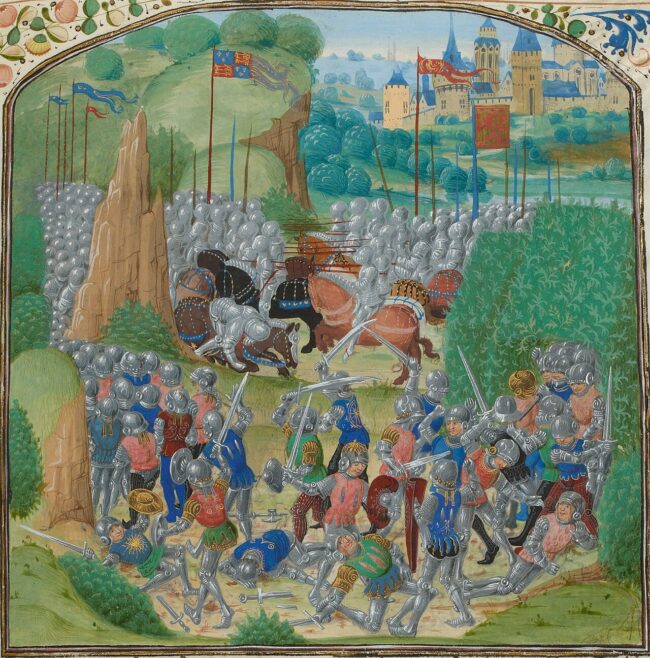
The Battle of Hastings was only the beginning of the Norman Conquest of England and castles were one of their key weapons in the conquest of the North.
To subdue the rebellious north William the Conqueror redistributed the lands of Anglo-Saxon lords to his trusted Norman knights, including the Percys, who continued the conquest. By 1086 the Percy family held large estates in Yorkshire, including Wetherby, and by 1400 they were perhaps the greatest landed family in the north.
Gillian Waters explored how the Percy family gained their lands and castles in the north of England, including Wetherby, and how their castles reflected the changing styles over the centuries; from early motte and baileys to fortified manor houses. She also explored how Tottenham Hotspur Football Club acquired its name, and how the Percys eventually lost their manor of Wetherby.
The Life Story of Ayrton Senna da Silva
Graham Read is an experienced Formula 1 correspondent and car tester, who also likes to share his passion for these subjects as a guest speaker, with his talks being accompanied by plenty of eye-catching PowerPoint images. On 26th November Graham will join us again to share his new talk all about the life on and off track of the iconic and charismatic Brazilian triple F1 world champion, Ayrton Senna da Silva, and it will cover all the major moments in his life from his birth to his sadly premature death.
Lord Armstrong Victorian Industrialist par excellence and Cragside
Brian Hull gave a presentation of Lord Armstrong the nineteenth century pioneering engineer. The talk featured many images of his industrial achievements and concluded with an exploration around the estate at Cragside, Rothbury, Northumberland and the famous house. Included were explanations of the ground breaking “Armstrong gun”, a highly innovative field artillery piece featuring the barrel comprised of successive layers of wrought iron, a breech loading mechanism, giving a manoeuvrable weapon, in stark contrast to the heavy artillery in use during the Crimea War, for which his invention was designed to supplant.
The many adaptations of hydraulic power and Armstrong’s famous Accumulator were noted, including the steam powered bascules of Tower Bridge, London, designed and installed by the Armstrong company. Other engineering achievements included swing bridges, most famously crossing the Tyne river, but also railway swing bridges over the Ouse in Yorkshire. Then mentioned were his enormous cranes often rated at 100 tons, used for lifting heavy gun barrels onto the ships built by Armstrongs on the Tyne. At the end of the nineteenth century his companies famously provided all the ships used by Japan in the Russo-Japan war.
His vision assisted by the architect Richard Norman Shaw in developing a hunting lodge on the hillside at Cragside into the delightful house situated above Debdon Burn, unique in the World for the electric power provided by hydro-electricity and visited today by many thousands each year, completed the talk.
The Cost of War – The History and Role of the Commonwealth War Graves Commission
Wetherby and Boston Spa Men’s Forum resumed its regular Wednesday morning meetings on the 7th of January after the Christmas break with a talk by a volunteer speaker from the Commonwealth War Graves Commission’s (CWGC) Foundation.
The illustrated talk detailed the history and role of the CWGC and how they ensure that the 1.7 million men and women of the Commonwealth that died in the world wars are commemorated across 23,000 sites in over 150 countries so that the human cost of war is remembered forever. The talk also focused on the Yorkshire contribution in the world wars with some poignant stories of those that paid the ultimate sacrifice and who are commemorated by the CWGC.
Safeguard yourself from fraud
Phew – it is so wet and cold – come and get warm & dry !
Come for a free cuppa tomorrow (28th January) and listen to Andy Fox telling you how to “Safeguard yourself from fraud”.
It is all happening in the St James Church Room, Wetherby commencing at 9.45 am.
Last week we heard Brian Hull giving a presentation of Lord Armstrong the nineteenth century pioneering engineer. The talk featured many images of his industrial achievements and concluded with an exploration around the estate at Cragside, Rothbury, Northumberland and the famous house.
Included were explanations of the ground breaking “Armstrong gun”, a highly innovative field artillery piece featuring the barrel comprised of successive layers of wrought iron, a breech loading mechanism, giving a manoeuvrable weapon, in stark contrast to the heavy artillery in use during the Crimea War, for which his invention was designed to supplant.
Don’t miss this week’s presentation – see you there ! !